Strength Training for Beginners: Your Step-by-Step Gym Floor Guide
Strength Training for Beginners: Your Step-by-Step Gym Floor Guide
By One Playground
Starting strength training can feel overwhelming, especially when you're walking into a gym for the first time. There are rows of machines, racks of dumbbells, unfamiliar equipment and people who seem to know exactly what they're doing.
But you don't need to know how to use every piece of equipment or have a perfectly structured workout plan before you begin.
Once you understand a few fundamental movements, how to choose your weights and how to structure a workout, getting started becomes much more straightforward.
Whether your goal is to build muscle, get stronger or simply feel more comfortable in the gym, here's everything you need to know to get started.
1. Start With the Fundamental Movement Patterns
Strength training, also known as resistance training, involves working your muscles against resistance, whether that's your own body weight, dumbbells, barbells or gym machines.
Rather than trying to learn dozens of individual exercises, start by understanding five fundamental movement patterns.
| Movement | What it works | Beginner exercises |
|---|---|---|
| Squat | Quads and glutes | Goblet squat, leg press |
| Hinge | Glutes and hamstrings | Dumbbell Romanian deadlift, hip thrust |
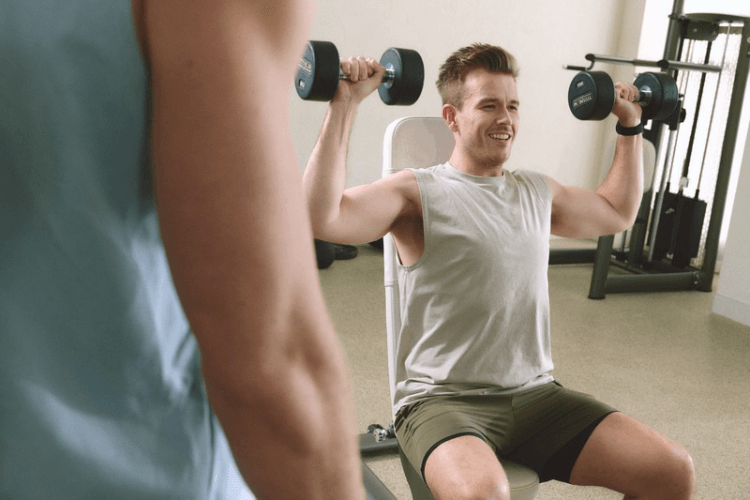
| Push | Chest, shoulders and triceps | Chest press, shoulder press |
| Pull | Back and biceps | Seated cable row, lat pulldown |
| Single-leg | Lower-body strength and stability | Reverse lunge, step-up |
Many of these are compound exercises, meaning they work multiple muscle groups and joints at once. They're an efficient way to build full-body strength without needing a long list of exercises.
You don't need to master every variation. Start with one exercise from each category and build your confidence from there.
2. Learn How to Choose Your Starting Weights
One of the most common beginner questions is: How heavy should I lift?
There's no universal starting weight. The right resistance depends on your current strength, the exercise and how many repetitions you're performing.
A useful starting point is to choose a weight that allows you to complete your target repetitions with good technique, while still feeling challenged towards the end of the set.
For example, if you're aiming for 10 repetitions:
- Reps 1-5 should feel relatively manageable.
- Reps 6-8 should require more effort.
- Reps 9-10 should feel challenging, but controlled.
Ideally, you should finish feeling like you could complete another two or three repetitions before reaching your limit. This is known as repetitions in reserve (RIR).
If you could easily complete another 10 repetitions, you may need a heavier weight. If your technique starts to break down before you finish, reduce the resistance.
When learning a new exercise, start lighter and prioritise controlled movement.
3. Understand Sets, Reps and Rest Periods
Most strength workouts are structured around three variables:
- Reps: The number of times you perform an exercise consecutively.
- Sets: The number of rounds of repetitions you complete.
- Rest: The recovery time between sets.
For example, 3 sets x 10 reps means completing 10 repetitions, resting, and repeating until you've completed three sets.
How Many Sets and Reps Should Beginners Do?
For most beginners, 2-3 sets of 8-12 repetitions per exercise is a practical starting point.
This gives you enough opportunities to practise the movement while challenging your muscles to develop strength.
Aim to rest approximately 60-120 seconds between sets, or longer for heavier exercises. The goal is to recover enough that you can perform your next set with good technique.
4. Try This Beginner Full-Body Strength Workout
You don't need a complicated training split to start building strength.
Full-body workouts are a great starting point because they allow you to practise fundamental movements regularly without spending hours in the gym.
Here's a simple beginner gym workout:
| Exercise | Sets | Reps |
|---|---|---|
| Goblet Squat | 2 | 10 |
| Dumbbell Romanian Deadlift | 2 | 10 |
| Chest Press Machine | 2 | 10 |
| Seated Cable Row | 2 | 10 |
| Reverse Lunge | 2 | 8 each leg |
| Dead Bug | 2 | 8 each side |
Before starting, spend 5-10 minutes warming up with light movement and a few practice repetitions of your first exercise.
Start with two full-body strength sessions per week, leaving at least a day between sessions to recover.
As you become more comfortable, you can gradually increase your weights, repetitions or training frequency.
5. Get Comfortable With the Gym Floor
Understanding the different areas of the gym can make your first few sessions much easier.
Weight machines are often a great place to start. They guide your movement along a fixed path and usually allow you to adjust resistance using a weight stack.
Free weights, including dumbbells, kettlebells and barbells, give you more freedom of movement and require greater control and stability.
Cable machines use adjustable pulleys to provide resistance and can be used for exercises such as rows, pulldowns and triceps extensions.
Squat racks and benches are commonly used for barbell exercises, including squats and bench presses. There's no need to rush into using them if you're still learning the basics.
You don't need to use every piece of equipment in your first session. Choose a few exercises, locate the equipment you need and focus on getting comfortable.
And if you're unsure how to adjust a machine or perform an exercise, ask a member of the One Playground team for assistance.
6. Know When to Increase Your Weights
Once you've started training consistently, the next step is making gradual progress.
This is called progressive overload, which means increasing the challenge placed on your muscles over time.
You can achieve this by:
- Increasing the weight you're lifting
- Completing more repetitions with the same weight
- Adding another set when appropriate
- Improving your technique and range of motion
For example, you might start with a dumbbell chest press using 6 kg dumbbells for three sets of eight repetitions.
Over the following weeks, you could gradually work towards three sets of 12 repetitions. Once you can complete those comfortably with good technique, you might be ready to increase the weight.
You don't need to lift heavier every session. Consistent, gradual improvement is what counts.
7. Focus on Consistency Before Complexity
When you're new to strength training, it's tempting to try different exercises every session or follow a more advanced program.
But doing too much, too soon can make it harder to develop good technique, recover properly and track your progress.
Instead, focus on a few simple habits:
- Train consistently, starting with two sessions per week.
- Repeat your core exercises so you can improve your technique.
- Record your weights and repetitions to track progress.
- Allow enough time for recovery between sessions.
- Prioritise controlled movement over lifting heavier weights.
You may notice improvements in your coordination and ability to perform exercises before seeing visible changes in muscle size. These are important signs of progress, too.
Ready to Start Strength Training?
You don't need to be strong to start strength training. You build strength by starting.
At One Playground, you'll find dedicated strength training spaces, a wide range of equipment and experienced coaches who can help you get comfortable on the gym floor.
Whether you're picking up your first dumbbell or looking to build a more consistent routine, there's a place for you to start.
Explore One Playground's facilities and find your nearest club.
More Articles
Spin Classes for Beginners: What to Expect in Your First Ride
New to indoor cycling? Discover what to expect in your first spin class, from bike setup and gear tips to workout structure.
Finding Your Flow: How Often Should You Do Yoga If You Train at the Gym?
Discover how to integrate yoga into your gym routine to improve mobility, accelerate recovery, and boost performance
Pilates for Lower Back Pain and Tight Hips: What to Expect
Discover how Reformer Pilates improves spinal health, core stability, and hip mobility to relieve lower back pain.