Beyond the Weights: Can Pilates Replace Traditional Strength Training?
Beyond the Weights: Can Pilates Replace Traditional Strength Training?
By One Playground
Walk into any gym or wellness studio right now and you'll notice something: Pilates is everywhere.
What was once considered a niche rehabilitation tool has become one of the most popular workout methods in Australia, and for good reason. But as more people fall in love with the reformer and the mat, a common question keeps coming up:
Can Pilates replace traditional strength training?
Whether you're chasing lean muscle, recovering from injury, trying to move better, or simply looking for a workout that fits your lifestyle, this is a question worth answering properly. Not with a simple yes or no, but with a clear-eyed look at what each training style actually does, and how they can work together to deliver results that neither can fully achieve alone.
At One Playground, we offer both, and we see firsthand how people thrive when they understand the strengths of each approach.
What Is Pilates?
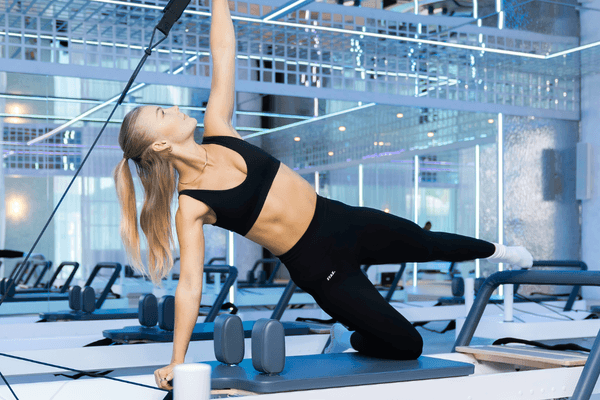
Pilates is a low-impact method of exercise developed in the early 20th century, designed to build strength, improve posture, and develop body control through slow, precise movements paired with intentional breathwork. Unlike high-intensity or heavy-load training, Pilates works by demanding quality of movement over quantity of effort.
At its core, Pilates training focuses on:
- Core-centred exercises that strengthen the deep stabilising muscles of the trunk, which is what Pilates practitioners call the “powerhouse”
- Controlled movement patterns that challenge balance, coordination, and neuromuscular connection
- Breath control linked to movement, which improves awareness and reduces tension
- Alignment and joint mechanics, with a strong emphasis on injury prevention
The result? Stronger postural muscles, better flexibility, improved balance, and a noticeable reduction in muscular imbalances, particularly between the left and right sides of the body.
At One Playground, you can explore Pilates through two formats: Mat Pilates, which uses your bodyweight on the floor to build strength and control, and Reformer Pilates, which uses a spring-loaded carriage to add resistance and greater range of motion. Both are excellent, and both offer something different depending on your goals.
What Is Traditional Strength Training?
Strength training focuses on building muscle, power, and physical resilience by working against resistance: whether that's free weights, machines, or your own bodyweight under load.
The foundational principle is progressive overload: gradually increasing the demands placed on your muscles over time so they continue to grow stronger and more capable.
The benefits of regular strength training are well-documented and wide-ranging:
- Builds and preserves lean muscle mass, which is critical for long-term health and metabolism
- Supports bone density and reduces the risk of osteoporosis
- Strengthens connective tissue, protecting joints from injury
- Improves physical performance across all activities
- Enhances mood, confidence, and cognitive function through hormonal and neurological effects
If you've always found weights intimidating, strength training is more simple and accessible than most people think.
At One Playground, our strength training classes are expertly programmed to help members lift safely and effectively, with sessions adaptable for complete beginners through to experienced lifters. The focus is always on measurable progression and proper technique, not just moving weight for the sake of it.
Is Pilates Strength Training? Understanding What Each Method Builds
So, is Pilates resistance training? Is Pilates strength training?
Technically, yes, to a degree. Pilates does place demands on your muscles, and over time, it will make you stronger. But the type of strength it develops is meaningfully different from what you'd build in a traditional weights programme.
Pilates primarily develops:
- Core stability and deep postural strength
- Muscular endurance, meaning the ability to sustain effort over time
- Control and strength through extended ranges of movement
- Functional coordination between muscle groups
Traditional strength training primarily develops:
- Maximal muscle strength, meaning the ability to generate high levels of force
- Muscle hypertrophy (growth in muscle size)
- Power and explosive force production
- High-load resilience in joints, bones, and tendons
Can Pilates build muscle mass?
For most people, Pilates alone will not produce the same degree of muscle hypertrophy as a structured resistance training programme.
Because Pilates relies primarily on bodyweight and spring resistance rather than progressive heavy loading, it generally falls short when it comes to maximising muscle size or raw strength.
This doesn't make it inferior; it simply means it's built for a different purpose.
Where Pilates genuinely excels, offering benefits that traditional lifting often cannot match, is in:
- Improving posture and spinal alignment
- Strengthening the deep stabilising muscles that most gym programmes overlook
- Enhancing mobility and functional flexibility
- Developing body awareness and proprioception
- Supporting injury prevention and rehabilitation
- Teaching better movement mechanics that transfer to other forms of exercise
Is Pilates good for building strength?
Yes, a specific and highly valuable kind of strength. But can Pilates replace strength training entirely? For most people, and most long-term health goals, the answer is probably no.
Pilates vs Strength Training: Why the Best Approach Uses Both
Here's the good news: you don't have to choose. When people ask whether it should be Pilates or weight training, the answer, more often than not, is both.
These two training styles complement each other in a way that creates genuinely well-rounded fitness.
Pilates supports your strength training by:
- Building the core stability that makes heavy compound lifts safer and more effective
- Improving movement quality and technique: better squats, better deadlifts, better form
- Reducing overuse injuries by addressing muscle imbalances and joint mobility
- Enhancing recovery through low-impact, controlled movement
Strength training supports your Pilates practice by:
- Building greater overall muscle strength and density
- Improving bone health through high-load stimulus
- Developing physical capacity that Pilates alone may not reach
Think about it practically: a more stable core means better technique under a barbell. Greater hip mobility from Pilates means deeper, more effective squats. And the controlled movement discipline of Pilates translates directly into safer, more intentional lifting.
If you're wondering about the best workout for strength and mobility combined, you're really asking about this kind of integration. It's also worth noting that Pilates is an excellent form of low impact training, making it ideal on recovery days or alongside heavier training weeks.
Who Should Prioritise Pilates?
While most people benefit from combining both approaches, Pilates may be the primary focus, or most appropriate choice, for:
- Beginners just starting their fitness journey, who benefit from building body awareness and foundational strength before loading
- People recovering from injury or managing chronic pain, for whom heavy loading isn't currently appropriate
- Those seeking low-impact exercise that's kind to joints but still highly effective
- Anyone whose primary goals are posture improvement, flexibility, and core strength
- People who want a sustainable, balanced workout routine that they can maintain long-term
Not sure which class is right for you?
Our guide to choosing the right Pilates class can help. And if you've never tried the reformer before, our beginner's guide to Reformer Pilates is the perfect place to start.
That said, even within these groups, adding some resistance training, even in a scaled or modified form, tends to deliver better long-term health outcomes. Pilates is an exceptional foundation. Strength training builds on top of it.
Pilates and Strength Training Don't Compete, They Collaborate
So, can Pilates replace strength training? The difference between Pilates and strength training isn't really about which one is better; it's about understanding what each one is designed to do and using both strategically to get the most out of your body.
Pilates builds the foundation: stability, control, awareness, and postural strength. Strength training builds the structure: muscle, power, density, and resilience. Together, they create the kind of fitness that's not just about looking strong, but moving well, feeling confident, and staying injury-free for the long term.
At One Playground, we've built our timetable around exactly this philosophy. Whether you're stepping onto the mat for the first time or looking to combine a reformer practice with a progressive lifting programme, our coaches are here to help you train with purpose.
Pilates classes at One Playground: Structured Mat Pilates and Reformer Pilates sessions focused on core strength, posture, and controlled movement, suitable for all levels.
Strength Training classes at One Playground: Progressive resistance workouts with expert coaching, designed for measurable results and safe, effective technique. View our strength classes here.
Ready to experience the best of both? Get a free pass and try it out today.
More Articles
Small Moves, Big Impact: Exercise Snacking for Busy Lifestyles
Discover how exercise snacking and micro workouts support daily movement, mobility and consistency for busy professionals.
5 Things I Wish I Knew Before My First HYROX
Discover One Playground Group Trainer Jay Haydock's top tips to help you prepare for and nail your first HYROX race.
One Playground Classes: Force | Progressive Strength Class
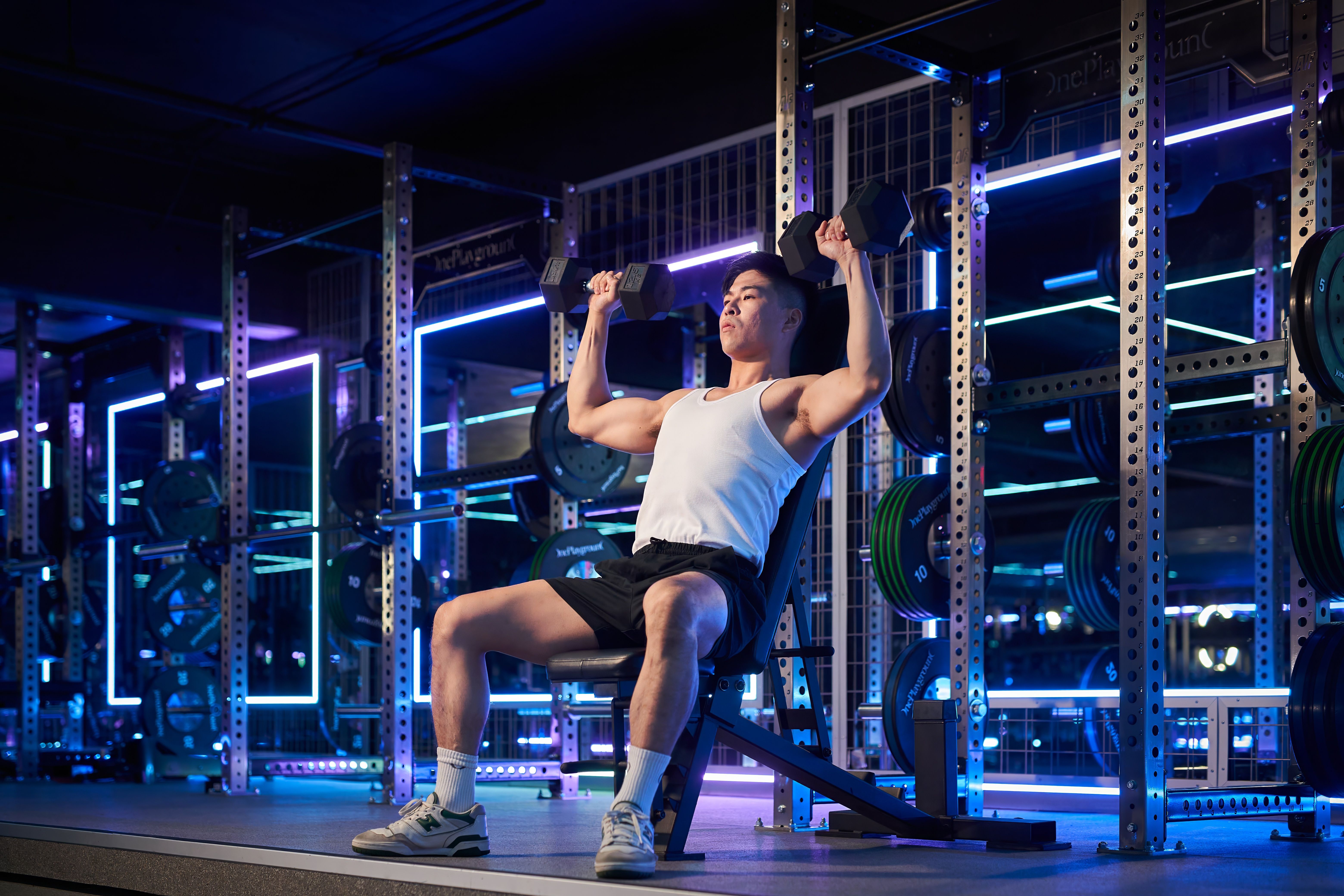
Force is a progressive strength program, utilising a structured 12-week cycle of progressive overload to build muscle and power. Combining expert coaching with heavy compound lifting, it offers a results-driven environment to help you master the squat, deadlift, and bench press while tracking measurable progress.